Food Waste diversion pilot rolling at Quincy High School

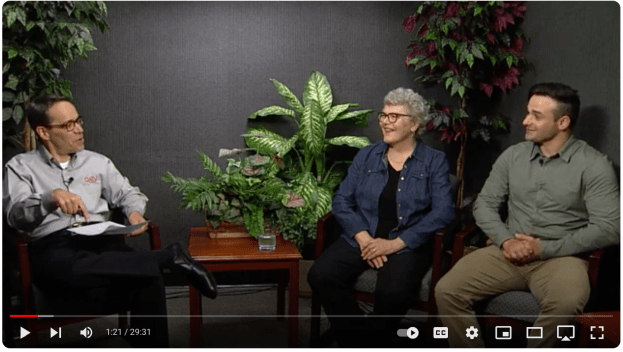
The food waste diversion pilot program at Quincy High School had a soft launch just after February vacation. Finbar Heaslip, who recently graduated from UMass Boston with a focus on sustainability, is the Program Director and is advised by volunteer Ruth Davis, a QCAN member who recently retired from managing MIT’s solid waste program. Finbar and Ruth did an interview with QATV to explain how the program works.

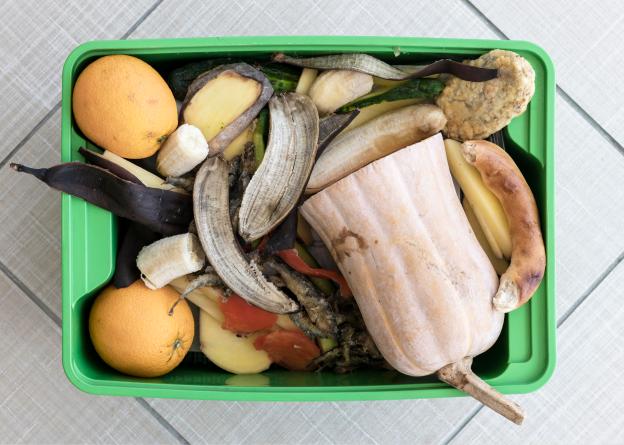
With the help of school staff, students are separating all food waste, recycling, and garbage, diverting about 100 pounds of food waste per day – over a ton per month. This includes the compostable lunch trays that Quincy Public Schools switched to in 2020 (from styrofoam) after QCAN members suggested it in a meeting with Mayor Koch.

Black Earth Compost is picking up the food waste from the school (Black Earth also offers weekly curbside compost pickups from Quincy homes for about $21 per month, or biweekly for about $16/month; Bootstrap Compost also serves Quincy for $11 per weekly pickup or $15 per biweekly pickup.) The food waste is mixed with yard waste and other organic materials in a big yard to break down, and is eventually distributed as compost for use in agriculture and gardens.

QCAN has advocated for food waste collection in Quincy for years. Several of our members served on the mayor’s task force to research curbside food waste pickup, which presented its report to the city council in November 2022. Their report supports collecting food waste not only in the schools, but city-wide, as is done in several other Massachusetts towns and cities.

Food rotting in landfills represents the third-largest source of the greenhouse gas methane in the US. Quincy incinerates its trash — about 30,000 tons of it per year — to generate energy. Still, since food waste is so water-rich, burning it consumes almost as much energy as it generates. So removing the 6,600 tons of food scraps that end up in our waste stream would improve the energy production of the remaining trash – and produce compost that improves soils and helps remove carbon dioxide from the atmosphere.
Let’s head towards net zero with the Opt-In Specialized Code

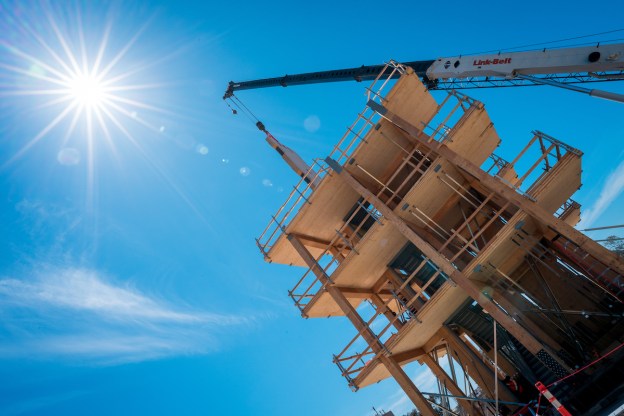
At its May 15 meeting the Quincy City Council passed a resolution asking the mayor to pull together a group to review the city’s current stretch code and assess the benefits and burdens of adopting the state’s new specialized stretch code. This group will include several city departments as well as Shelly Dein, Director of Energy and Sustainability, and nongovernmental people. QCAN hopes to be involved in this group.

The Opt-in Specialized Code provides stricter requirements on the use of gas and fossil fuels for heating and cooking to encourage new construction to go “all-electric.” There will be financial and environmental benefits for residents, public projects, and private projects.

The matter has been referred to the city council’s Environmental & Public Health Committee and Community Engagement Committee. It will be important to let our city councillors know that we are looking forward to making progress on this initiative.

The Stretch Energy Code (Stretch Code) is an additional energy code requirement on top of the Massachusetts “base” Energy Code. The Stretch Code is designed to promote energy efficiency and reduce greenhouse gas emissions in new construction and substantial renovations. The New Buildings Institute describes it as a “locally mandated code or alternative compliance path that is more aggressive than the base code, resulting in buildings that achieve higher energy savings.” One of the benefits they cite is that a Stretch Code can align many of the relevant market actors: “Through making future base code requirements known in advance, it provides tremendous motivation to manufacturers and distributors to compete for future market share of what will ultimately be required products.”

– Keith Johnson, QCAN board member

image: Jacobs School of Engineering, UC San Diego (CC BY-NC-SA 4.0)

QCAN at Cleaner, Greener Quincy

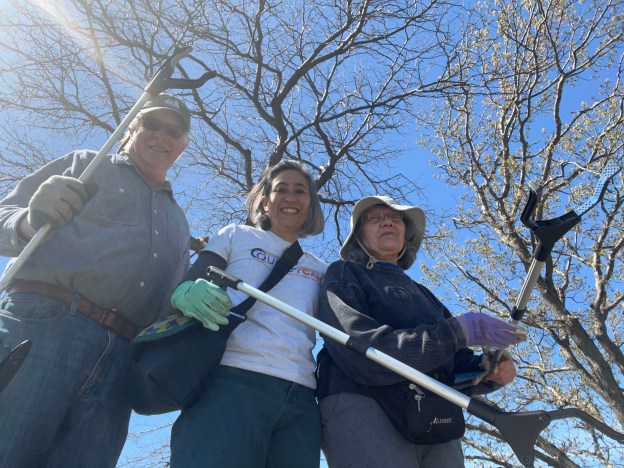
QCAN members enjoyed the beautiful weather and the chance to clean up Quincy’s marshes last Saturday at the annual Cleaner, Greener Quincy event. We cleaned our regular area between Caddy Memorial Park and Sailor’s Home Park.

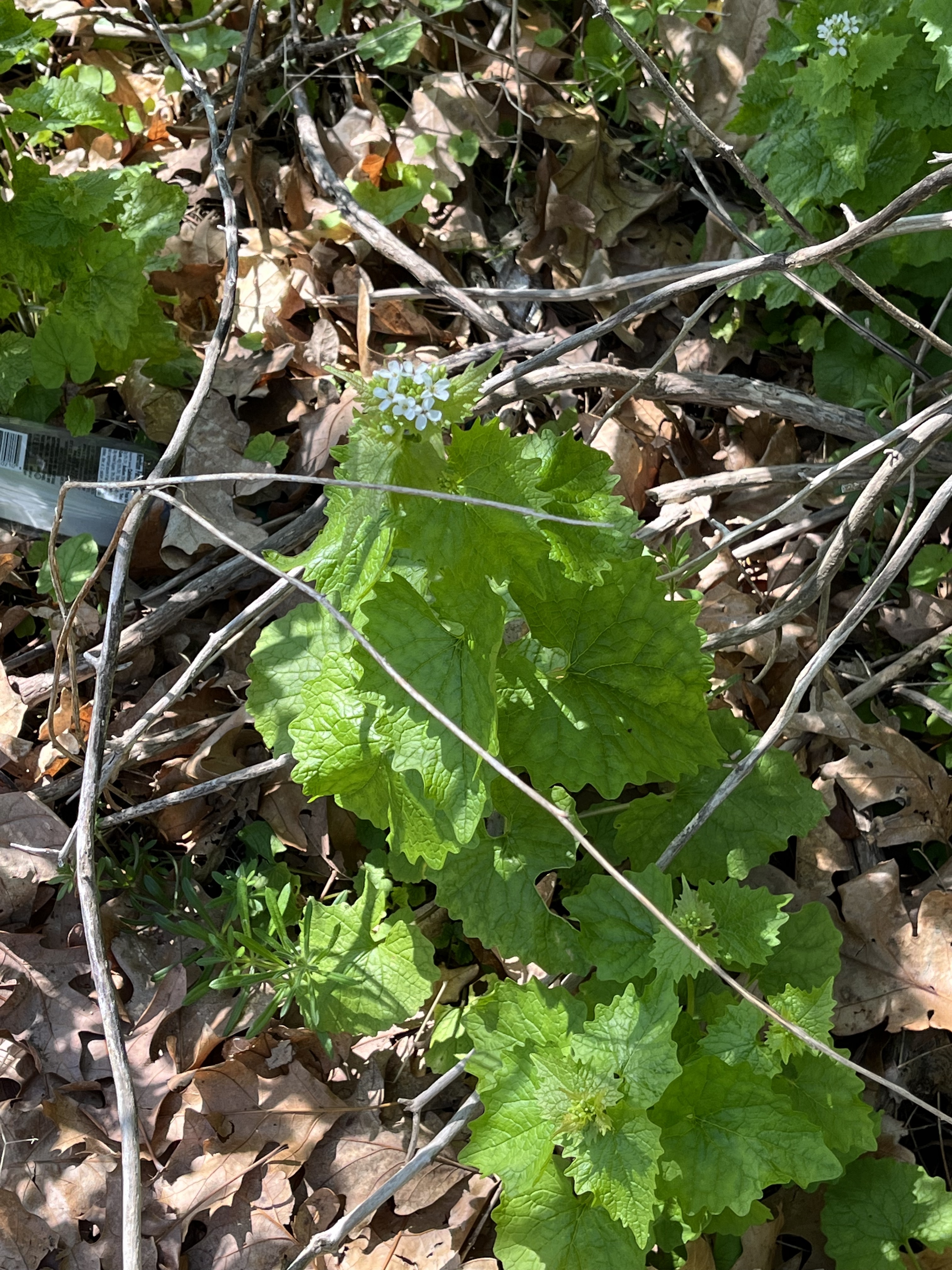
This year we not only removed the usual garbage but also pulled a lot of wild garlic mustard – an invasive (and edible) plant that has been spreading quickly in the area.

Ward 4 Councillor candidates on climate change

Councillor Brian Palmucci resigned as Ward Four City Councillor after accepting a nomination to become an associate justice of the district court. This vacancy means the city will hold a special election to fill this seat for the rest of the unexpired term. Because more than two people have returned papers, there will be a preliminary special election Tuesday, Jan. 17. The election to pick a new councilor will take place Tuesday, Feb. 7.

QCAN would like to know, and would like voters in Ward 4 to know, how these candidates plan to help fight climate change in our city. We posed the following question to the four candidates:

“If elected to finish out this term, what would you like to do with your time on city council to fight climate change?”

As of January 3rd we received responses from Joel Buenaventura, Matthew Lyons, and James Devine.

Joel Buenaventura  (via email):

I am a proponent of “Think Globally, Act Locally.” We know climate change is real and Quincy, a coastal city in an urban environment, is particularly vulnerable to the impacts of air pollution and rising sea levels. 

For the remainder of the Ward 4 Councilor’s Term in 2023, I will continue the conversation with the Administration:

  • Food waste collection at QPS and curbside food waste pick-up.
  • Forestry Division in the development of the urban canopy. Ward 4 hosts the largest concentration of trees in the City. I want to make sure trees and tree health is maintained.
  • To inquire on Pine Hill Cemetery Expansion and environmental impacts.
  • To promote participation in the 34th Annual Cleaner, Greener Quincy in the spring of 2023 with my Ward 4 neighbors.

I hope that the above bullet points are just a start to our conversation. As Councilor, I would also like to expand on (1) sustainability, (2) net zero emissions, (3) climate resilient infrastructure and operations. I look forward to attending your meetings and hearing from your members about your most pressing concerns. 

Matthew Lyons (answered via facebook comment):

Coastal resiliency, ensuring city infrastructure is being planned in a way that accounts for sea level rise and climate change. Ensuring that city building codes are progressive without raising costs for working families.

Devine for Ward 4 (answered via facebook comment):

I believe we still need to work on the opt-in stretch code, if so I would like to see more. Another item is the compost task force, reclaiming organic waste. This hits two levels one we have less weight in trash pick up which saves money on our budget and second we can produce our own soil, saving tax payers money twice. I apologize for the brief comments. This is a fast pace to prove my worth to be a Councillor for Ward 4, and many more items to answer and conquer.

City to begin food waste collection in schools

Plans are nearly complete for a new food waste collection program in the Quincy Public Schools. The program will begin as a pilot at one school this fall, expand to a second school in the spring, and continue to expand into more schools. The next step in the process is to hire a part-time K-12 Food Waste Diversion/Compost Program Manager, who will be tasked with managing the operation, conducting waste audits, and creating educational programs for students and staff. Applicants should apply online.

QCAN has encouraged the implementation of food waste collection for years. Several QCAN members served on the mayor’s task force created in 2018 to research curbside food waste pickup. The task force engaged in many fact-finding activities, including conducting interviews and onsite visits to learn how other food waste collection programs function. The results of their extensive research were compiled in a report that was submitted to the mayor’s office this spring and is tentatively scheduled for presentation to the City Council on November 21. Their report supports collecting food waste not only in the schools, but city-wide, as is done in Cambridge and several other towns and cities in the commonwealth.  

Why collect food waste separately? Quincy’s trash is sent to an incinerator and burned as waste for energy. However, due to the high water content of food waste, burning it uses more energy than it creates — and that moisture also makes it heavy, adding extra expense to the city’s trash bill. Collecting and composting food scraps instead of throwing them out is a better alternative that benefits everyone, including the planet. It not only reduces how much the city will pay for trash removal, it puts the food waste to work, reinvesting those nutrients into our increasingly depleted topsoil. Food scraps can be made into compost that feeds our gardens so we can grow more food. How cool is that?

Continue reading

Quincy Community Electricity stuck at the DPU

QCAN has long advocated for Quincy to adopt municipal aggregation, in which community residents and businesses pool their buying power to purchase electricity in bulk, often securing lower and stable prices and often including a higher percentage of renewables in the mix. (In our 2018 and 2020 letters to the Quincy Sun, we specifically pushed for Green Municipal Aggregation, whereby the default electricity supply includes more Class I renewable content than is required by the Massachusetts Renewable Portfolio Standard and Clean Energy Standard.)

Thanks in part to QCAN’s advocacy, the city created a draft plan for Quincy Community Electricity, opened the plan for public comment and hearing, and submitted it to the state Department of Public Utilities (DPU) in January 2021. Only after the plan is approved by the DPU can Quincy put out a competitive bid for an energy supplier and get cheaper, greener electricity flowing.

Unfortunately, Quincy has been stuck too long waiting for the DPU to approve our aggregation plans. And it turns out we are not alone: On October 16, the Boston Globe reported that 32 Massachusetts cities have been waiting for at least a year and a half for the DPU to review their plans – while New Hampshire and Rhode Island process applications within 60 days.

Continue reading

QCAN says, “Yes on 1”

While QCAN normally focuses on local climate action and does not endorse political candidates, we were moved to officially put our support behind the Fair Share Amendment that will be on the ballot as Question #1 in the upcoming Massachusetts election. That’s because, if this amendment passes, it will create money to help support our public transportation system and electrify our city buses. And if more people utilized public transportation – if our transit system was better funded and more reliable so more people could and would use it more often – there would be fewer cars on the road, less fossil fuels burning, less air pollution from combustion engines. Good for the environment, good for slowing down climate change, good for our overall health. 

So what is the Fair Share Amendment, exactly?

The Fair Share Amendment “would create a 4% tax on the portion of a person’s annual income above $1 million and require – in the state constitution – that the funds be spent only on transportation and public education.” This would generate an estimated $2 billion in additional revenue each year to invest in better public schools and universities, safer bridges, and more reliable public transportation. To ensure that this additional tax continues to apply only to the commonwealth’s highest-income taxpayers, the $1 millon income threshold will be adjusted annually to reflect any increases in the cost of living.

Continue reading